
Blog Index
WooCommerce Development Cost in India: What Business Owners Should Know in 2026
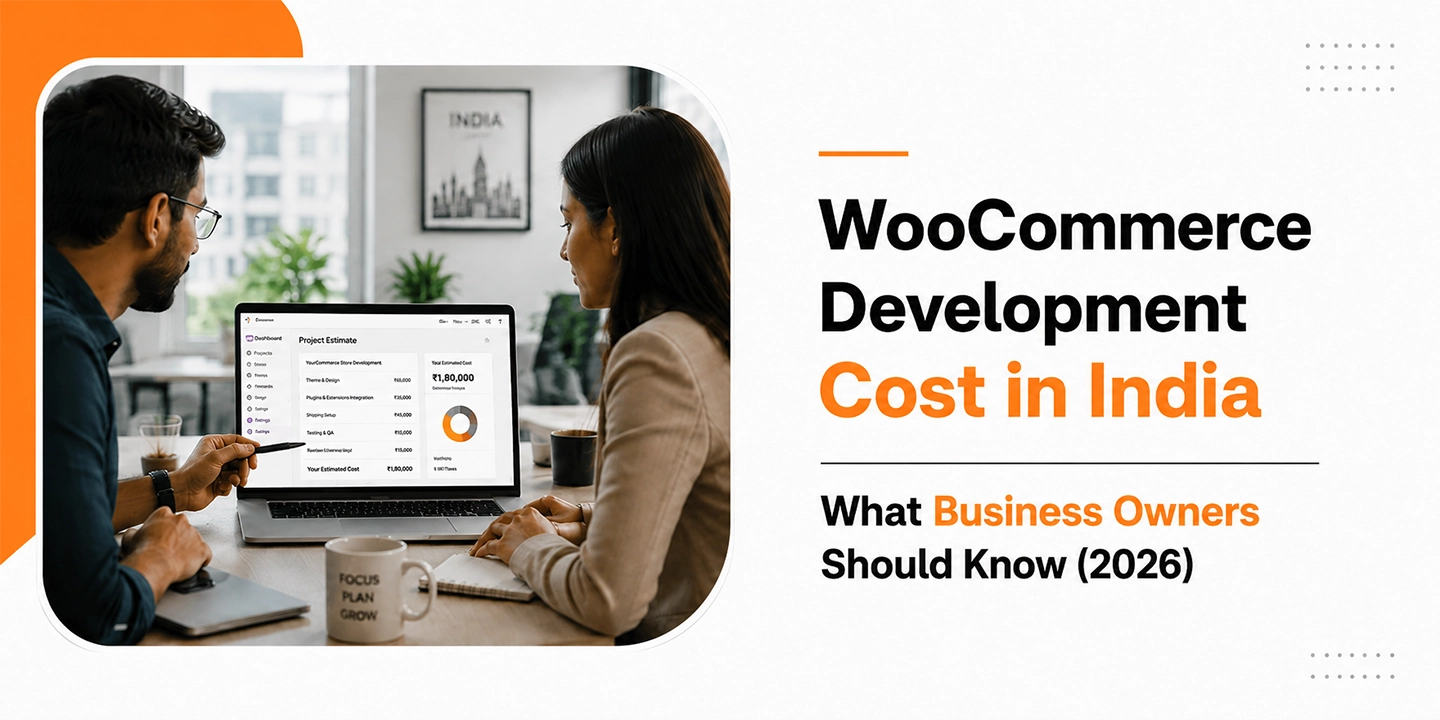
If you plan to hire woocommerce developer in India, expect a broad range driven by scope, integrations, and performance needs. Many hiring briefs in 2026 show up to 55% year on year growth in demand for WooCommerce skills, which pushes prices and talent competition. That makes early budgeting and clear scope your best defense.
Why India still matters for WooCommerce projects in 2026
India remains one of the most cost-competitive markets for ecommerce builds, but cost does not mean cheap outcomes. Cities from Bangalore to Pune and Hyderabad host seasoned teams that can build enterprise grade stores or lean direct to consumer shops. You can work with a large Woocommerce development company in India, a boutique Woocommerce website designer india, or hire a freelance Woocommerce web developer in india depending on the trade-off you want between price and attention.
What changed in 2026 is demand. More Indian teams are handling complex payment flows, headless setups, and internationalization, so hourly rates lifted as capability rose. That matters because the sticker price for an ecommerce project is as much about feature depth as agency reputation.
How to hire woocommerce developer in India without overspending
Start with the problem, not the tech. Define whether you need a catalog catalog under 1,000 SKUs or a marketplace with vendor dashboards. That clear scope will stop scope creep and give you a defensible estimate.
Budget categories to set up first
- Core build, theme and page templates: baseline work to make the store functional.
- Custom features, subscriptions, complex bundles, or custom checkout logic.
- Integrations, like ERP, tax engines, shipping aggregators, and payment gateways in India and abroad.
- Migrations, including WordPress to woocommerce integration in india from legacy sites or other platforms.
- QA and performance, essential for conversion and organic visibility.
- Maintenance and hosting, which are ongoing operating costs.
Allocate at least 15 to 25 percent of your initial build cost for the first year of support if you want predictable uptime and security updates.
Typical cost breakdown: practical INR numbers
Below is a practical cost table that reflects typical mid-market project spends in India for 2025 and realistic 2026 projections. Use it as a baseline, not a hard quote. Figures are illustrative and given in rupees.
WooCommerce Cost Breakdown (India, INR)
| Metric | 2025 Value | 2026 Projected |
|---|---|---|
| Small store (theme, basic config) | ₹30,000–₹70,000 | ₹35,000–₹85,000 |
| Medium store (custom theme, 1-3 integrations) | ₹1,50,000–₹4,00,000 | ₹1,80,000–₹4,50,000 |
| Complex store (marketplace, subscriptions) | ₹6,00,000–₹18,00,000 | ₹7,00,000–₹22,00,000 |
| Payment and shipping integrations | ₹20,000–₹80,000 | ₹25,000–₹95,000 |
| WordPress to woocommerce integration in india (migration) | ₹50,000–₹3,00,000 | ₹60,000–₹3,50,000 |
| Monthly maintenance and hosting | ₹3,000–₹40,000 | ₹4,000–₹50,000 |
Source: market hiring briefs sample, 2026 projection
Context matters: a single third party payment plugin that needs custom work will move you from the small store band to the medium band quickly. If you plan multi-currency payouts or marketplace seller split-payments, budget for bespoke engineering and legal compliance work with Indian payment aggregators.
Pricing models you will encounter
Most vendors in India will pitch one of three models. Know which aligns to your risk tolerance and timeline.
Fixed price
Best for well scoped projects, with clearly defined deliverables and milestones. Fixed price is predictable, but it requires a detailed brief. If you change scope later, expect change orders.
Time and materials
Good when requirements are evolving. You pay for hours. It gives flexibility but requires governance, standups, and deliverables tracking. If you expect continuous feature work after launch, this model is common.
Retainer / managed service
For ongoing operations, performance optimization, and periodic feature releases. Retainers are often used by larger stores or brands that treat their store like a product with a roadmap.
Skills and rates: who charges what in India
Hourly rates shifted up in 2026 with competition for senior talent. Typical ranges you will see:
- Junior developer: ₹400–₹900 per hour.
- Mid-level developer: ₹900–₹1,800 per hour.
- Senior developer: ₹1,800–₹4,000+ per hour for product architects or specialists in headless commerce.
Designers and UX specialists are often billed separately, or bundled in agency packages. When hiring a Woocommerce development company in India, validate whether they include designers, QA, and DevOps in the stated price, or whether those are add-ons.
Risk checklist: where budgets slip
Budget leaks tend to follow predictable patterns. Watch these items closely.
- Unclear scope, which leads to feature creep and extra sprints.
- Third-party APIs that change pricing, rate limits, or require complex reconciliation.
- Performance tuning needed for large catalogs or peak sale events, often requiring additional infrastructure spend.
- Regulatory compliance for GST, data residency, and payment rules that may require custom reporting modules.
Contractually, ask for a contingency buffer in the quote, or split the project into phases so you can validate assumptions before committing to larger spends.
Practical example: a mid-market brand migration
Scenario: A growing consumer brand in Mumbai has a slow, custom CMS and wants to migrate to WooCommerce with multi-location shipping and a subscription product. They need WordPress to woocommerce integration in india, payment split for subscriptions, and analytics tracking.
Workflow and budget bones
Phase 1, discovery and scope, two weeks: ₹60,000
Phase 2, migration and core build, six to eight weeks: ₹2,25,000
Phase 3, integrations (payment gateway, shipping aggregator, subscription plugin customization): ₹1,00,000
Phase 4, QA, performance tuning, and launch: ₹40,000. First year maintenance and iterative improvements: ₹6,000 per month
Outcome: The migration reduced page load times by half and increased conversion rate by a measurable margin within two months post-launch. That improvement made the investment self-funding in marketing ROI terms. The takeaway is that spending more up front on proper migration and performance often outperforms choosing the cheapest path.
How to evaluate vendors beyond price
Price is important, but vetting should include these elements.
- Case studies, ideally with stores similar in catalog size and traffic to yours.
- Access to code samples or a staging environment so you can verify code quality and deployment practices.
- Support SLAs that match your sales cycles and peak windows in India, such as festival seasons.
- Clear IP and handover terms to avoid lock-in.
Also check whether the team has experience with the local payments ecosystem and GST reporting. That reduces surprises at launch.
When to choose a local agency versus a remote freelancer
Both routes work. Choose a local agency if you need project management, design, and multiple skills bundled. Choose a remote freelancer for small fixes, theme tweaks, or short-term tasks. Many businesses combine both: an agency for the build and a freelance Woocommerce web developer in india for ongoing micro work.
For enterprise projects, prefer vendors with DevOps and monitoring experience who can manage traffic spikes during large sale days.
Negotiation tactics that actually work in India
Ask for tiered milestones, a discount for upfront payment, or a mix of fixed price for core deliverables and time and materials for uncertain items. Consider performance-based clauses for conversion or speed improvements if that aligns with your business model.
And always get a clear change order process in writing. That prevents disagreements on scope creep and additional charges.
Local adoption notes: what Indian buyers prioritize in 2026
Buyers increasingly value fast time to market, optimized performance for mobile users, and local payment experiences. That means solutions that are mobile-first, integrate with UPI and popular wallets, and optimize server-side rendering for SEO will command higher quotes but better outcomes. If your store depends on organic traffic, invest in performance and structured data early.
Tools and plugins that affect cost
Licenses add up. Premium theme licenses, subscription plugins, payment gateway fees, shipping plugins, and analytics add monthly or one-time costs. Factor them in when you compare vendor proposals.
And remember, custom work is the most expensive line item. Wherever possible, prefer battle-tested plugins to custom builds, unless you have a clear differentiation reason to build custom logic.
How to save money without sacrificing long-term value
Keep these tactics in your toolkit.
- Phase the project: launch a minimum lovable product, then iterate based on real usage data.
- Use managed hosting with built-in caching and CDN instead of buying separate infrastructure and hiring DevOps for small shops.
- Standardize integrations across ecosystems used by multiple vendors to reduce one-off dev tasks.
Also consider contracting a part-time technical lead to reduce communication overhead and keep the agency accountable to a product roadmap.
Red flags to watch for when hiring
Watch out for vendors who promise a launch in an unrealistically short time without a plan for QA or performance. Also be wary of proposals that leave key integrations or testing out of the scope to hide costs. Request a clear deliverable checklist tied to payment milestones.
Final checklist before you sign
Make sure your contract includes:
- Deliverable list and milestones
- Ownership of code and credentials
- Support hours and response times
- Change order process
- Security and data handling clauses
These items protect your investment and make vendor performance measurable.
Where to find vetted WooCommerce talent in India
Look for portfolios showing realistic deployments, client references, and demonstrable uptime for stores. Large metros like Bangalore, Mumbai, and Chennai have deep talent pools, but remote teams across smaller cities are also competitive on price and quality.
Consider trial projects to test fit before committing to a large migration or custom build.
What to expect in the next 12 months
Expect continued demand for headless commerce, better integrations with Indian payments and logistics, and more agencies offering bundled analytics and CRO as part of the service. That will keep top-tier hourly rates elevated, but will also make full service offerings more attractive for brands seeking predictable results.
And yes, if you need help to Understand WooCommerce development costs in India and the factors that affect your ecommerce project budget., check vendors who publish transparent case studies and fixed-scope packages. Understand WooCommerce development costs in India and the factors that affect your ecommerce project budget.
Conclusion
Hiring WooCommerce talent in India in 2026 means trading off hourly rate against product and delivery quality. With demand up, clarity of scope, phased delivery, and smart integration choices are the most reliable cost controls. Budget for migration, integrations, and at least a year of maintenance to avoid surprises.
Whether you partner with a Woocommerce development company in India, a specialist Woocommerce website designer india, or an individual Woocommerce web developer in india, the best outcome comes from clear goals, realistic timelines, and a vendor you can measure against milestones. Plan accordingly and the store you ship will be both a cost and a competitive asset.
You Might Also Like...