

Blog Index
Shopify Development for Fashion and Lifestyle Brands in 2026: Features That Matter
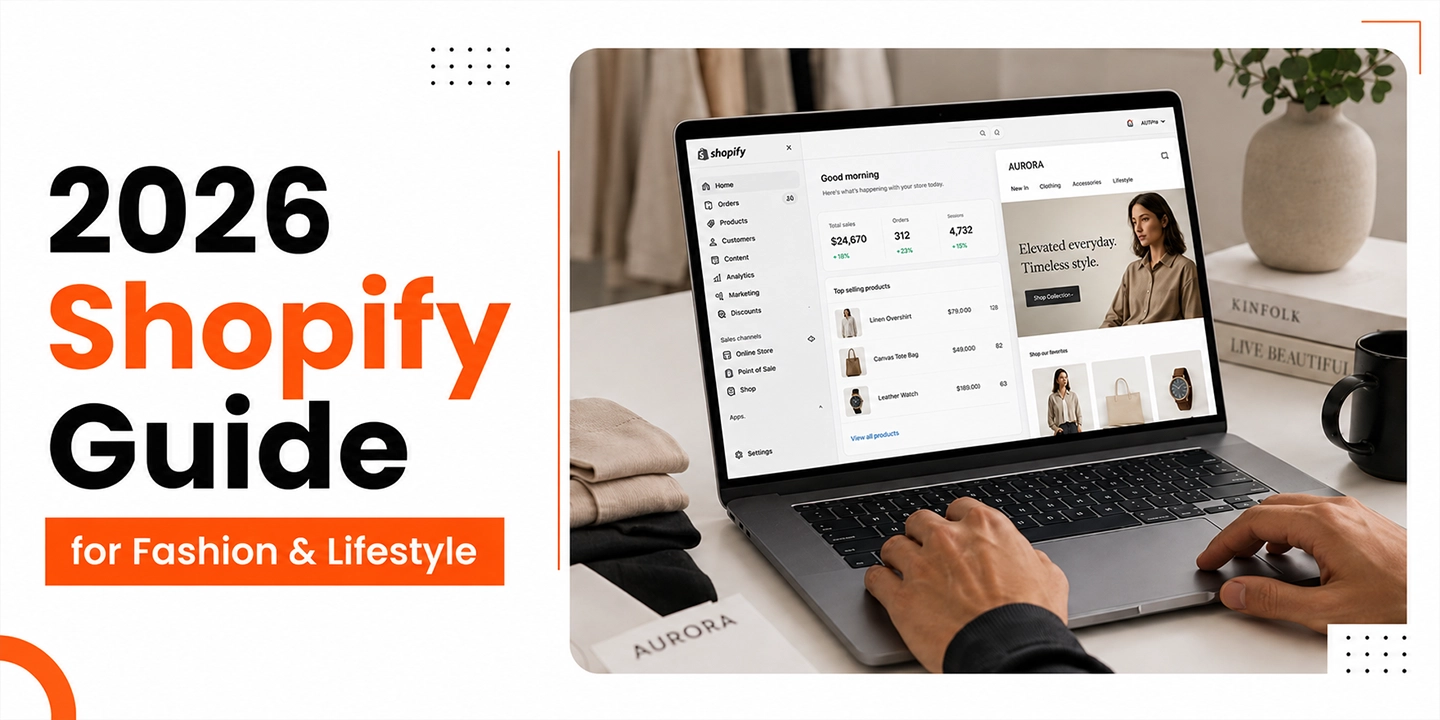
Fashion and lifestyle ecommerce is highly visual, but a good-looking storefront alone is not enough. Customers expect fast browsing, easy size and colour selection, strong product discovery, mobile-friendly shopping, clear delivery information, and a smooth checkout experience.
For brands evaluating a Shopify development service in India, the real focus should be on features that improve both customer experience and day-to-day ecommerce operations. A capable Shopify development company in India should understand product variants, merchandising, performance, integrations, mobile UX, and international growth rather than simply installing a theme.
Here are the Shopify features that matter most for fashion and lifestyle brands in 2026.
Why Fashion and Lifestyle Brands Need Specialized Shopify Development
Fashion stores usually have more product complexity than a standard ecommerce catalogue.
One product may be available in several:
- Sizes
- Colours
- Materials
- Patterns
- Fits
- Styles
- Collections
Lifestyle brands may also sell across apparel, accessories, beauty, footwear, jewellery, home products, and gifts.
As the catalogue grows, problems can appear with filtering, product discovery, mobile browsing, inventory, merchandising, and store performance.
This is where an experienced Shopify development agency in India can help structure the store around how customers actually shop rather than relying only on the default theme setup.
Product Variants and Colour Swatches
Make Size and Colour Selection Simple
Fashion customers need to understand available variants quickly.
A product page should clearly show:
- Available sizes
- Available colours
- Selected option
- Out-of-stock variants
- Correct product images
- Variant-specific pricing where applicable
Colour swatches usually work better than text dropdowns because customers can see available options immediately.
For some brands, different colours may need their own product imagery and merchandising while still appearing as one overall product experience.
A good Shopify setup should prevent customers from becoming confused between styles, colours, and availability.
Size Guides and Fit Information
Sizing is one of the biggest concerns when buying fashion online.
Stores should provide more than a simple S, M, L selector.
Useful information may include:
- Body measurements
- Product measurements
- Model height
- Size worn by the model
- Fit type
- Stretch information
- International size conversions
- Measuring instructions
The size guide should be easy to access beside the size selector rather than hidden somewhere in the footer.
A Shopify website designer in India working on fashion ecommerce should consider size information as part of the buying experience, not just extra content.
Advanced Collection Filters
Large fashion catalogues need strong filtering.
Customers may want to browse products by:
- Size
- Colour
- Gender
- Material
- Style
- Fit
- Price
- Collection
- Occasion
- Availability
The important thing is choosing filters based on customer behaviour.
For example, a fashion store might use:
Category → Size → Colour → Style → Price
A lifestyle store might need:
Category → Material → Colour → Collection → Price
Too many filters can make the shopping experience confusing. The goal is to help customers narrow the catalogue quickly.
Strong Store Search
Search becomes increasingly important as product count grows.
Customers might search for terms such as:
- Black midi dress
- Oversized shirt
- Brown leather bag
- Summer co-ord
- Wedding guest outfit
- Gold earrings
A useful search experience should understand how customers describe products rather than depend only on exact product titles.
Brands should regularly review popular searches and searches returning poor results.
A Shopify web developer in India may also need to customize search behaviour when the catalogue contains unusual product attributes, collections, or merchandising rules.
Product Pages Designed Around Buying Decisions
A fashion product page should answer the customer’s most important questions without making them search around the website.
Important elements include:
- Product title
- Price
- Product images
- Colour options
- Size selector
- Size guide
- Fit information
- Material details
- Care instructions
- Stock availability
- Delivery details
- Return information
- Product recommendations
Product pages should remain visually clean even when there is a lot of information.
This is one area where strong Shopify website design service in India expertise becomes useful because product presentation and technical functionality need to work together.
High-Quality Product Images and Video
Fashion shoppers cannot physically inspect the product, so imagery carries much of the buying experience.
Useful product media may include:
- Front view
- Back view
- Detail shots
- Model photography
- Lifestyle photography
- Product video
- Fabric close-ups
- Different colour views
However, large image galleries can affect page speed.
Images and videos should therefore be handled carefully so that product pages remain visually strong without becoming unnecessarily slow on mobile devices.
Complete-the-Look Recommendations
Fashion and lifestyle brands have strong cross-selling opportunities.
Examples include:
Dress → Bag → Shoes → Jewellery
or:
Shirt → Trouser → Jacket → Belt
Instead of displaying random products, recommendations should be connected to how customers style or use the main product.
Useful sections may include:
- Complete the look
- You may also like
- Similar styles
- Matching accessories
- Shop the outfit
This can make product discovery more useful while also increasing the number of products a customer considers.
Bundles and Curated Sets
Bundles can work well for both fashion and lifestyle stores.
Examples include:
- Top and trouser sets
- Jewellery collections
- Skincare sets
- Bedding collections
- Travel kits
- Gift bundles
Before development, brands should decide:
- Can customers choose sizes individually?
- Can colours be mixed?
- What happens if one item is unavailable?
- How should inventory be reduced?
- Can bundled products be returned separately?
- Does the bundle include a discount?
These rules become more important as bundle complexity increases.
Mobile-First Shopping Experience
A large percentage of fashion discovery happens through mobile channels such as social media, paid ads, influencers, email, and search.
Mobile shopping should therefore be considered from the beginning.
Important areas to test include:
- Navigation
- Search
- Filters
- Product gallery
- Colour swatches
- Size selection
- Add-to-cart button
- Cart drawer
- Checkout
- Promotional banners
A store should not simply shrink the desktop design to fit a smaller screen.
Businesses planning to hire Shopify developer in India should make mobile testing part of the development and QA process from the start.
Store Speed and Performance
Fashion stores often become heavy because of:
- Large product images
- Videos
- Review apps
- Tracking scripts
- Marketing tools
- Recommendation apps
- Custom JavaScript
- Third-party integrations
Over time, this can affect storefront performance.
The development team should regularly review:
- Image sizes
- Theme code
- Unused scripts
- Installed apps
- Third-party resources
- Product page loading
- Collection page performance
A visually impressive store is not useful if customers leave before the product page finishes loading.
Wishlist and Saved Products
Fashion customers do not always buy immediately.
A wishlist allows them to save products and return later.
This can be useful for:
- Seasonal collections
- Premium fashion
- Furniture and lifestyle products
- Gift shopping
- Occasion wear
- Products customers want to compare
Wishlist data may also help brands understand which products generate interest even before purchase.
Inventory Across Stores and Warehouses
Fashion and lifestyle brands may sell through:
- Online store
- Physical retail locations
- Warehouses
- Pop-up stores
- Third-party fulfillment
- International locations
Inventory needs to remain accurate across these channels.
Customers should not be able to purchase something online that the business cannot actually fulfill.
As the business grows, Shopify may also need to connect with ERP, warehouse, POS, or inventory-management systems.
International Selling
Fashion brands often expand into multiple markets.
The store may eventually need:
- Multiple currencies
- International pricing
- Different languages
- Regional shipping
- Local domains
- Country-specific promotions
- Duties and taxes
- Market-specific catalogues
International ecommerce should be planned as a complete customer journey.
Simply enabling another currency does not create a localized experience.
Brands should consider:
Pricing + currency + shipping + returns + language + tax + customer support
for every important market.
Shopify Automation
Growing ecommerce businesses often spend significant time on repetitive administrative work.
Automation may help with:
- High-value order alerts
- Customer tagging
- Low-stock notifications
- Fraud-review processes
- Internal notifications
- Product tagging
- Customer segmentation
- Order routing
- Back-office updates
Automating these repetitive tasks becomes more useful as order volume increases.
Businesses may also choose to hire Shopify developer in India resources when automation requires custom logic or connections with other business systems.
ERP, CRM and PIM Integrations
Larger fashion and lifestyle businesses rarely operate with Shopify alone.
The store may need to connect with:
- ERP
- CRM
- PIM
- Warehouse systems
- Shipping providers
- POS
- Accounting software
- Customer support systems
- Loyalty platforms
- Marketing tools
A typical order process could look like:
Customer → Shopify → ERP → Warehouse → Shipping → Shopify → Customer
The technical challenge is not just connecting the systems.
The development team should also consider:
- Failed API calls
- Duplicate records
- Inventory conflicts
- Order status mapping
- Refunds
- Cancellations
- Retry logic
- Monitoring
A strong Shopify development company in India should treat integration as a business workflow rather than only an API connection.
When Shopify Plus May Be Useful
Not every fashion brand needs Shopify Plus.
Standard Shopify can support many growing businesses.
Shopify Plus becomes more relevant when the brand has more advanced requirements such as:
- Large-scale operations
- Multiple markets
- Complex integrations
- B2B requirements
- Advanced product structures
- Multiple storefront needs
- Larger internal ecommerce teams
- More complex custom development
The decision should be based on actual requirements rather than assuming that a larger brand automatically needs Plus.
How to Choose a Shopify Development Partner
Before hiring a development company, brands should prepare examples from their real product catalogue.
Ask the agency:
- How should our sizes and colours be structured?
- How should collection filters work?
- How will product media affect performance?
- How should out-of-stock variants behave?
- Can our ecommerce team edit content without developers?
- How will international markets be handled?
- How will inventory connect with external systems?
- What happens if an integration fails?
- How will mobile UX be tested?
- What support is available after launch?
Businesses planning to hire Shopify developer in India or looking for a Shopify web developer in India should also confirm whether the developer has experience with production ecommerce stores rather than only general WordPress or frontend development.
A Shopify development agency in India should understand both technical implementation and the shopping behaviour of fashion customers.
Conclusion
For fashion and lifestyle brands in 2026, successful Shopify development depends on much more than visual design.
Product variants, size guides, filtering, search, product imagery, recommendations, bundles, mobile UX, performance, international selling, inventory management, automation, and system integrations all affect the customer experience.
Brands comparing a Shopify development service in India should choose a team based on ecommerce expertise and their actual business requirements.
Whether a company needs a Shopify website designer in India, a technical development team, or wants to hire Shopify developer in India, the objective should remain the same: create a storefront that makes products easier to discover, understand, and purchase while remaining manageable as the business grows.
You Might Also Like...