

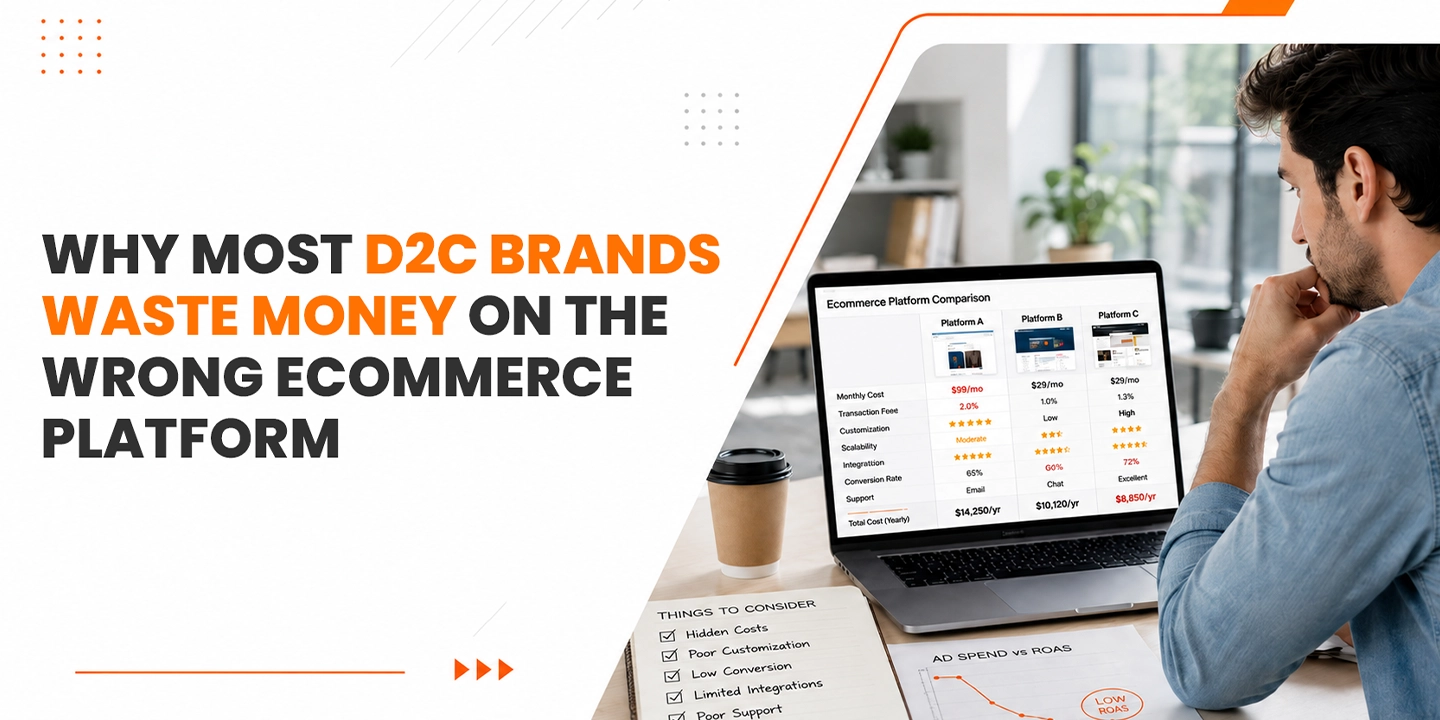
The D2C (Direct-to-Consumer) industry has completely transformed the way brands sell products online. Instead of depending on marketplaces or third-party retailers, businesses now prefer to connect directly with customers through their own websites. This approach gives brands more control over customer experience, branding, pricing, and profit margins.
However, while many D2C businesses invest heavily in social media marketing, paid advertisements, and influencer campaigns, they often ignore one of the most important decisions — selecting the right eCommerce platform.
A wrong platform can silently drain money from your business through slow performance, poor scalability, unnecessary plugins, expensive maintenance, and low conversion rates. Many brands realize this only after they face operational issues or when scaling becomes difficult.
Choosing the right technology foundation is not just a technical decision anymore. It directly impacts customer experience, sales performance, and long-term business growth.
This is why many growing businesses prefer working with an experienced eCommerce development company in India to build scalable and future-ready online stores.
The Real Cost of Choosing the Wrong eCommerce Platform
Many D2C brands think all eCommerce platforms are similar because they offer basic features like product management, payment gateways, and order tracking. But the real difference becomes visible when the business starts growing.
A poor platform can create several long-term problems that increase operational costs and reduce profitability.
Poor Website Performance
Website speed directly affects user experience and conversions. If your online store takes too long to load, customers leave before even viewing products.
Slow websites can lead to:
- Higher bounce rates
- Lower conversions
- Reduced customer trust
- Poor search engine rankings
Customers today expect websites to load within seconds. Even a slight delay can impact revenue significantly.
Professional eCommerce website developers India focus on optimized website architecture to ensure fast loading speed and smooth performance.
Limited Scalability
Many businesses choose platforms that work fine initially but fail during traffic spikes or business expansion.
As your business grows, you may need:
- More product listings
- Multi-location inventory
- International payment gateways
- Multi-language support
- High traffic handling
If the platform cannot support growth, businesses are forced to spend heavily on migrations and redevelopment later.
High Maintenance Costs
Some platforms appear affordable initially but become expensive over time because of:
- Plugin subscriptions
- Third-party app costs
- Platform transaction fees
- Developer dependency
- Security updates
These hidden expenses can increase operational costs every month.
This is why businesses should evaluate long-term value instead of focusing only on initial pricing.
Common Mistakes D2C Brands Make
Many D2C businesses repeat the same mistakes while selecting an eCommerce platform. Understanding these mistakes can help brands avoid unnecessary expenses.
Choosing Based Only on Price
Startups often choose the cheapest available solution to save money in the beginning. While budget is important, selecting a platform only because it is cheap can become a major problem later.
Low-cost platforms often come with limitations such as:
- Restricted customization
- Slow website speed
- Limited integrations
- Poor scalability
- Generic design templates
Eventually, brands spend more money fixing these limitations.
A reliable eCommerce web development company India helps businesses choose platforms based on growth goals instead of short-term savings.
Ignoring Future Growth
Many brands think only about their current business size. They fail to plan for future growth.
For example, a platform that supports 100 products today may struggle when the catalog grows to 10,000 products.
Similarly, platforms that work for local sales may not support global expansion effectively.
Future-ready platforms should support:
- Traffic growth
- Product expansion
- Omnichannel selling
- International shipping
- Advanced analytics
Planning for scalability early saves significant redevelopment costs later.
Depending Too Much on Plugins
Several eCommerce platforms rely heavily on plugins and third-party applications for additional functionality.
While plugins may solve temporary problems, excessive plugin usage creates serious challenges.
Common issues include:
- Website slowdown
- Security vulnerabilities
- Compatibility problems
- High monthly subscription costs
Too many plugins also increase technical complexity, making website maintenance difficult.
Instead of depending entirely on plugins, businesses should invest in custom-built solutions through a trusted eCommerce website service in India provider.
Overlooking Mobile Experience
Most online shoppers now browse products and complete purchases through smartphones. Yet many D2C brands still operate websites that are not fully optimized for mobile devices.
Poor mobile experience leads to:
- Cart abandonment
- Low conversions
- Frustrated customers
- Lower search engine rankings
A mobile-friendly store should include:
- Responsive design
- Fast loading pages
- Simple navigation
- Easy checkout process
- Optimized product images
Mobile-first development is essential for modern eCommerce success.
Why Customization Matters in D2C eCommerce
D2C brands compete heavily on customer experience and brand identity. Generic websites rarely perform well in highly competitive industries.
Customization helps brands create a unique shopping experience that improves customer engagement and conversions.
Brand Identity and User Experience
Your website is the digital face of your business. A customized design helps communicate your brand story effectively.
Strong branding includes:
- Unique visual design
- Personalized user journeys
- Custom product displays
- Interactive shopping experiences
Customers are more likely to trust and purchase from brands that provide professional and memorable experiences.
Custom Features and Flexibility
Every business has different operational requirements.
For example:
- Fashion brands may need size charts and style recommendations
- Beauty brands may require subscription systems
- Electronics stores may need comparison features
- Food businesses may require delivery scheduling
Flexible development allows businesses to create features specific to their industry needs.
This is why businesses increasingly prefer customized eCommerce solutions India instead of relying entirely on pre-built templates.
The Importance of API Integration
Modern eCommerce businesses use multiple tools to manage operations efficiently. These tools need to communicate with each other smoothly.
Automation and Business Efficiency
API integration allows businesses to automate workflows such as:
- Inventory updates
- Order management
- CRM synchronization
- Shipping tracking
- Customer notifications
Without proper API support, businesses often rely on manual processes, which increases errors and reduces efficiency.
Third-Party Integrations
D2C brands commonly use third-party tools for:
- Marketing automation
- Accounting
- Analytics
- Customer support
- Warehouse management
A platform with weak API capabilities can make these integrations difficult and expensive.
This is why many businesses invest in professional eCommerce api development india services to build smooth and scalable integrations.
SEO and Performance Challenges
A technically weak eCommerce platform can negatively affect search engine visibility and online sales.
Slow Loading Speeds
Search engines prioritize fast websites because they provide better user experience.
Slow websites can harm:
- Organic rankings
- Customer engagement
- Conversion rates
Optimized coding, image compression, and proper hosting infrastructure are essential for maintaining high performance.
Technical SEO Limitations
Some platforms provide limited SEO flexibility, making it difficult to optimize websites properly.
Common SEO limitations include:
- Duplicate URLs
- Poor schema implementation
- Weak mobile optimization
- Restricted metadata editing
- Slow crawlability
An experienced eCommerce development company in India can build SEO-friendly stores designed for better visibility and long-term organic growth.
How to Choose the Right eCommerce Platform
Selecting the right platform requires proper planning and business analysis.
Focus on Scalability
Choose a platform that can support future business growth without requiring major redevelopment.
Look for features such as:
- Cloud scalability
- Multi-store management
- Global selling support
- Flexible infrastructure
Evaluate Customization Options
Your platform should allow enough flexibility to create unique customer experiences and custom workflows.
Avoid platforms with rigid templates and limited development capabilities.
Check Mobile and SEO Capabilities
Mobile optimization and SEO should never be treated as optional features.
Before selecting a platform, evaluate:
- Mobile responsiveness
- Website speed
- SEO settings
- Core web vitals
- Performance optimization
Working with professional eCommerce website developers India can help businesses make the right technical decisions.
Why Working with the Right Development Partner Matters
Technology alone cannot guarantee success. The expertise of the development team also plays a major role.
An experienced eCommerce web development company India can help businesses with:
- Platform selection
- Custom development
- API integrations
- UI/UX optimization
- SEO implementation
- Performance enhancement
- Ongoing maintenance and support
The right development partner understands both business goals and technical execution, helping brands build scalable and profitable eCommerce stores.
Conclusion
Many D2C brands waste money not because their products are bad, but because they build their business on the wrong eCommerce platform.
A poor platform creates long-term challenges including slow performance, scalability issues, security risks, plugin dependency, and poor customer experience. These issues eventually increase operational costs and limit business growth.
Instead of focusing only on low initial pricing, businesses should evaluate long-term scalability, customization flexibility, API capabilities, SEO performance, and mobile experience.
Investing in the right platform from the beginning can save businesses significant time, money, and technical complications in the future.
Partnering with a trusted eCommerce website service in India provider can help brands build powerful, scalable, and future-ready digital stores that support sustainable growth in the competitive D2C market.
