
Blog Index
Your Ecommerce Store Looks Fine — So Why Aren’t Customers Buying?
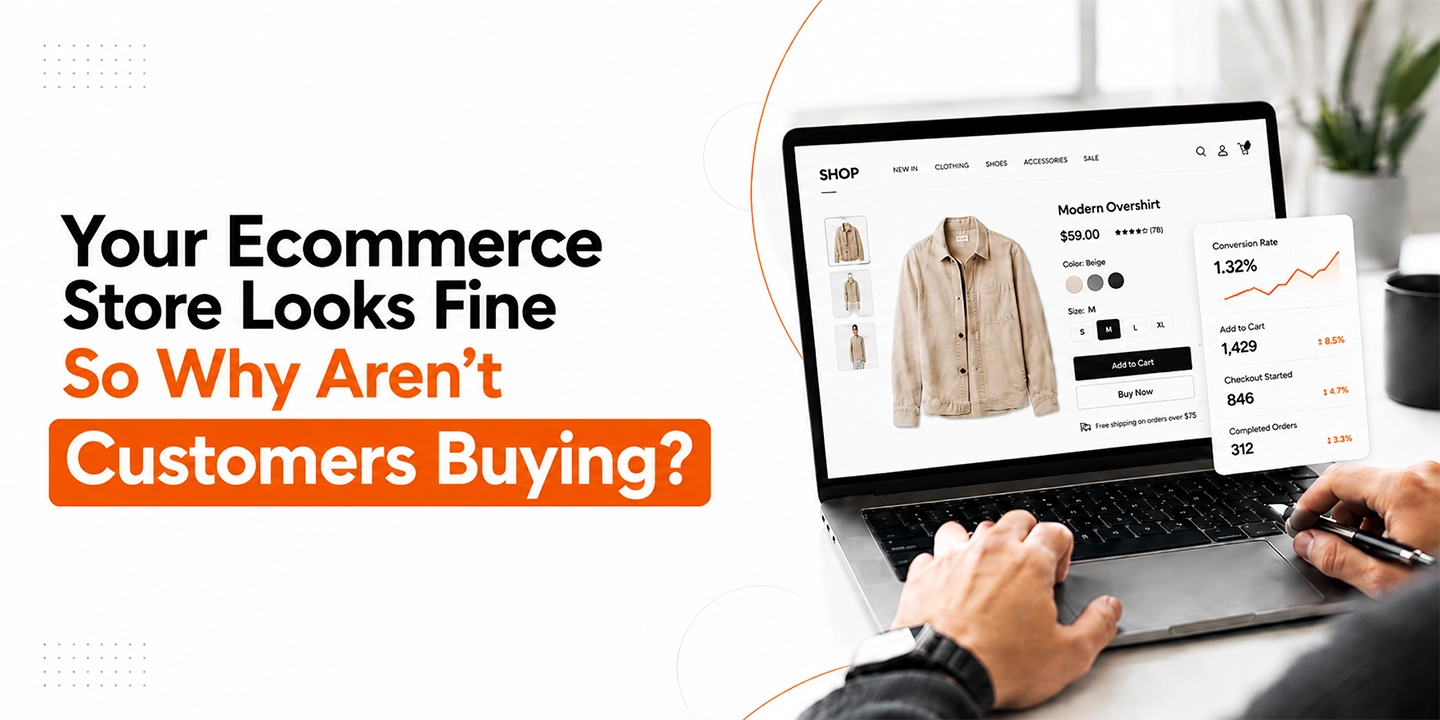
A lot of ecommerce businesses quietly struggle with the same problem.
Traffic comes in. Products look good. The homepage feels modern. Social media ads are running consistently. Yet sales remain unpredictable.
At first, most business owners blame marketing.
Then they lower prices.
Then they redesign banners.
But the actual issue is often much deeper than appearance.
Customers don’t buy from ecommerce stores simply because they “look professional.” They buy from stores that make shopping feel easy, trustworthy, and comfortable from beginning to end.
That difference is what separates stores that get visitors from stores that generate consistent revenue.
Looking Good and Selling Well Are Two Different Things
There’s a common misconception in ecommerce that a visually attractive website automatically converts customers.
It doesn’t.
A clean layout may help create a positive first impression, but conversions depend on something else entirely: user experience.
Customers are constantly evaluating small details while browsing a website. Most of those decisions happen subconsciously.
If the website feels slow, confusing, overwhelming, or unreliable, people leave quietly without purchasing.
That’s why many brands now work with an experienced eCommerce web development company in India that focuses on customer behavior instead of only design aesthetics.
Because the reality is simple — design attracts attention, but usability drives sales.
Most Customers Leave Before You Realize There’s a Problem
One of the biggest challenges in ecommerce is that customers rarely explain why they leave.
They don’t send emails saying:
“Your checkout process felt too long.”
Or:
“The product page didn’t feel trustworthy enough.”
They simply close the website and move on.
That’s why many businesses believe their store is performing well when, in reality, visitors are experiencing small frustrations throughout the shopping journey.
Even tiny issues create hesitation:
- Slow page loading
- Weak mobile experience
- Poor navigation
- Unclear product information
- Complicated checkout flow
Individually, these problems may seem minor. Together, they quietly reduce conversions.
Your Website Might Feel Slower to Customers Than It Does to You
Business owners often test their websites on high-speed office internet or modern devices. Customers don’t always browse under the same conditions.
A store that feels “fine” internally may feel frustratingly slow to actual users.
And customers today are impatient.
If a product page takes too long to load, many visitors won’t wait long enough to see the product itself.
Speed directly affects:
- Customer engagement
- Search visibility
- Bounce rate
- Mobile usability
- Conversion rate
This is one reason businesses investing in ecommerce development India are focusing heavily on performance optimization instead of only visual redesigns.
Fast ecommerce stores usually feel more trustworthy and easier to shop from.
Customers Need Confidence Before They Purchase
People are naturally cautious while shopping online.
Unlike physical stores, customers cannot touch products, ask staff questions instantly, or inspect items directly. Because of this, ecommerce websites need to create reassurance digitally.
Unfortunately, many stores unintentionally create uncertainty instead.
A product page may look visually attractive but still fail to answer important customer questions.
For example:
- Is the sizing accurate?
- What does the material actually feel like?
- How long will delivery take?
- What happens if the product needs to be returned?
When these answers are unclear, hesitation increases.
Strong ecommerce websites reduce uncertainty instead of increasing it.
That’s why ecommerce website developers in India now focus more on customer clarity and shopping flow rather than simply adding design elements.
Mobile Shopping Is No Longer Secondary
Many ecommerce businesses still design websites primarily for desktop screens and adjust them for mobile later.
That approach no longer works well.
Most ecommerce traffic now comes from mobile users. Customers expect websites to feel smooth, fast, and easy to use on smaller screens.
But many stores still create frustrating mobile experiences:
tiny buttons, cluttered layouts, slow product galleries, awkward menus, and difficult checkout forms.
Customers rarely tolerate that friction anymore.
An experienced eCommerce design company in India usually treats mobile usability as a core conversion factor — not just a technical requirement.
Because if mobile shopping feels difficult, customers leave quickly.
Too Much “Selling” Can Actually Reduce Sales
Some ecommerce websites try too hard to push conversions.
Visitors land on the website and immediately face:
- Popups
- Discount banners
- Email forms
- Chat notifications
- Countdown timers
- Multiple offers
Instead of creating urgency, this often creates pressure and distraction.
Modern customers usually respond better to calm, focused shopping experiences.
The stores performing best right now often feel cleaner and simpler. They guide users naturally instead of aggressively forcing actions at every step.
Generic Ecommerce Stores Are Easy to Forget
Customers browse countless ecommerce websites every month.
If a store feels too similar to every other template-based website online, people rarely remember it later.
That’s becoming a bigger issue in ecommerce.
Successful brands are now focusing more on:
- Stronger brand voice
- Better storytelling
- Consistent product presentation
- Unique customer experience
An experienced eCommerce company in India understands that branding is not only about logos or colors. It’s about how the shopping experience feels emotionally to customers.
Memorable brands usually create stronger repeat business.
Checkout Is Often Where Sales Disappear
Many businesses focus heavily on getting traffic and improving product pages but ignore checkout optimization completely.
That’s a costly mistake.
Customers who already added products to the cart are interested in purchasing. But unnecessary checkout friction often interrupts the process.
Long forms, confusing layouts, hidden costs, or mandatory account creation create hesitation at the worst possible moment.
Customers expect checkout to feel quick and predictable.
The best ecommerce experiences reduce decision-making during checkout instead of adding more steps.
An experienced eCommerce agency in India often prioritizes checkout simplification because even small improvements can noticeably increase completed purchases.
Customers Want Transparency More Than Perfection
Ecommerce customers do not expect brands to be perfect.
But they do expect honesty and clarity.
Trust grows when websites clearly communicate:
- Shipping timelines
- Return policies
- Customer support options
- Payment security
- Product expectations
Many ecommerce stores unintentionally hide important information inside complicated pages or unclear policies.
That creates doubt.
Transparent communication usually converts better than overly polished marketing language.
More Features Don’t Always Improve Ecommerce Stores
Some businesses continuously add apps, plugins, animations, or promotional features hoping to improve conversions.
But excessive functionality often slows websites down and makes shopping more confusing.
A cleaner experience usually performs better.
Modern ecommerce strategy is shifting toward:
- Faster interactions
- Simpler navigation
- Cleaner interfaces
- Better usability
- Reduced friction
That’s why businesses working with ecommerce website service in India providers are increasingly simplifying stores instead of overcomplicating them.
Customers Buy Faster When Shopping Feels Easy
The best ecommerce stores remove effort from the buying process.
Customers should never have to “figure out” how to use the website.
Good ecommerce experiences feel natural:
products are easy to browse, information feels clear, checkout feels simple, and trust feels immediate.
That smoothness is what quietly improves conversion rates.
And it usually matters more than flashy visuals alone.
The Most Successful Ecommerce Brands Focus on Experience
Brands that consistently grow online usually focus on the entire customer journey rather than only website appearance.
They improve:
- Speed
- Navigation
- Mobile usability
- Product clarity
- Checkout simplicity
- Customer trust
Because ecommerce success is rarely about one dramatic change.
It’s usually the result of many small improvements working together.
Businesses partnering with an eCommerce development company in India are increasingly investing in long-term usability and conversion optimization because customer expectations continue evolving every year.
Final Thoughts
An ecommerce store can look modern, attractive, and professionally designed — and still struggle with sales.
Customers buy when the overall experience feels smooth, trustworthy, and easy from beginning to end. Even small usability problems can quietly reduce conversions without businesses noticing immediately.
The good news is that most ecommerce conversion issues are fixable.
Improving mobile usability, simplifying checkout, strengthening trust signals, speeding up pages, and creating clearer product experiences often produce far better results than another visual redesign alone.
The ecommerce brands growing successfully right now are focusing less on looking impressive and more on making shopping feel effortless.
That’s what truly turns visitors into customers.
You Might Also Like...